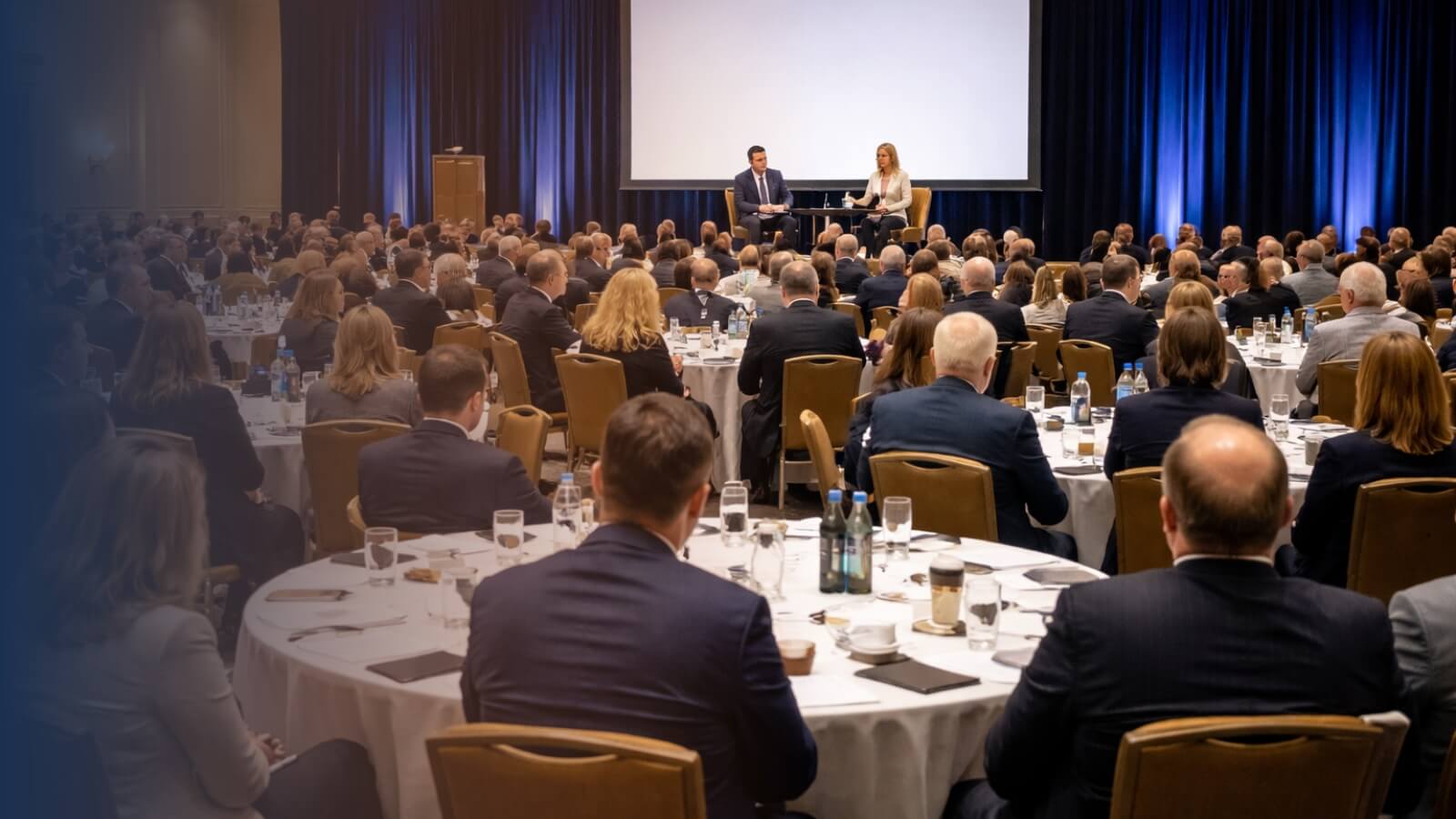
I recently attended the CHRO Association’s 2026 CHRO Summit in Orlando and several other HR leader gatherings. Having served as a CHRO myself, I left these events with a renewed appreciation for just how complex and consequential the role has become.
The pace of change facing organizations right now is unlike anything we’ve seen in recent years. From AI to geopolitical uncertainty to workforce well-being, the breadth of responsibility for HR leaders continues to expand. What struck me most was the reality that there is no clear playbook. CHROs are increasingly expected to act as enterprise transformation leaders.
Many of these themes closely reflect the conversations we’re having every day with HR leaders and executives at Navigate Forward. CHROs are expected to navigate massive ambiguity while shaping the organization’s future in real time.
Below are the ideas that bubbled to the surface for me, and where I believe HR leaders should focus their attention.
1. AI is a people challenge
AI continues to dominate the conversation, but the most important takeaway is this: AI is not actually a technology challenge; it’s a people challenge. HR needs to lead this thinking. They must lean in on this topic and be willing to experiment and accept uncertainty.
As speaker, author, and professor, Ethan Molick shared on the Future of HR Podcast,
“Experimentation requires some daring. The differentiator…between companies that are succeeding and failing at AI is not so much the details of implementation as much as C-level people willing to bear risk, and willing to realize this is an experimental phase.”
Yes, the tools matter, but only to a point. One idea that resonated deeply is that success with AI is roughly 10% tools, 20% process, and 70% adoption and culture. That has significant implications for job architecture and reskilling, particularly as organizations scale adoption.
Leaders are navigating a critical tension, and a traditional ROI framework will not work. If AI is framed primarily as a way to reduce costs or eliminate jobs, employees will adapt, but not in the way organizations intend. Innovation will go underground, and companies risk losing their edge. CHROs are fast becoming the leaders best positioned to ask which tasks should be automated, which roles need to be redefined, what skills will matter next, and how we can keep trust intact while moving fast.
The better question is: How can AI make us better, not just leaner?
That requires both governance and courage:
- Expand access to AI as a tool across the workforce
- Create a human plus digital workforce governance that protects data, while allowing for innovation
- Start with real business problems and redesign processes first
- Move quickly to experiment with AI: Fail fast, learn, and prune the solutions that are not creating capacity or innovation
- Reimagine job architecture as work fundamentally changes
An idea that stood out was identifying the “worst four hours” of an employee’s week and using AI to change this work first. In this instance, AI can offer an immediate, meaningful impact. The emerging metric is reinvention capacity.
At its best, AI becomes a growth driver, not a job eliminator. But realizing that potential requires leaders to think differently about capacity, capability, and the future of work.
2. Geopolitical uncertainty impacts people strategy
Another clear takeaway: external forces are now deeply impacting culture, workforce planning, and stability. Geopolitical uncertainty, policy shifts, and regulatory complexity are constantly creating talent risks. CHROS are central to enterprise preparedness, risk mitigation, and continuity.
These are fundamentally human challenges. They require leaders who can:
- Look ahead to anticipate the impact of these shifts on work
- Communicate clearly in moments of uncertainty
- Guide teams through ambiguity
- Align people strategy with rapidly shifting external conditions
During periods of uncertainty, organizations need steady, aligned leadership. Well-managed transitions can have an outsized impact on stability and performance.
3. Workforce well-being is not a nice to-do; it is a strategic imperative
Workforce well-being is no longer a programmatic conversation. It is a core business issue and a critical component of any talent strategy.
Mental health is front and center. We need to remove stigma and offer human-centered solutions and support. One theme that stood out is the growing impact of caregiving on workforce disruption. Most employees are supporting someone else while trying to do their job and maintain their own mental well-being. We must think differently about our workforce’s needs.
The gap between employees’ awareness of support and employer-provided programming is widening, eroding engagement. The challenge is not just expanding benefits but creating a genuine connection to ensure employees know what exists, can access it, and feel supported in using it.
There is growing recognition that sustained performance depends on how work is designed, not just how benefits are structured. The shift toward prioritizing recovery, mental well-being, and “brain health” reflects a more modern view of performance.
For HR leaders, the question becomes: How do we design work to enable people to perform and sustain their performance over time?
4. The CHRO role is expanding in both scope and influence
The most consistent theme throughout the summit was the ongoing evolution of the CHRO role. Today’s CHRO is not only responsible for talent, but they are also shaping:
- AI and workforce transformation
- Organizational design and job architecture
- Workforce wellbeing and culture
- Risk, compliance, and external alignment
The CHRO is even more central to the creation of enterprise strategy.
This shift also requires new capabilities. Many organizations are exploring ways to build stronger partnerships between HR and technology teams. There is a consistent view that more digital leadership is needed within the HR function itself.
At the same time, the role requires a balance of strategic thinking and human insight. AI can improve efficiency, but it cannot replace judgment. Leaders must still determine where human decision-making is essential.
5. Successful HR leaders will continue to evolve
Stepping back, what struck me is how much is being asked of HR leaders right now. The pace of change is unprecedented. The expectations are high. And the path forward may appear unclear.
The success of HR leaders in the future will be based on leading through ambiguity, making decisions without complete information, communicating with transparency and clarity, and balancing innovation with stability. There is no static playbook. Today’s most effective leaders are continuously learning, adapting, and evolving in real time.
Looking Ahead
At Navigate Forward, we partner closely with HR leaders who are navigating exactly these kinds of challenges, providing an experienced sounding board and solutions that range from executive transition (or outplacement) and talent mobilization to executive development and retention strategies and onboarding.
As workforce strategy continues to evolve, one thing remains constant: the need for thoughtful, human-centered leadership. Organizations that invest in their leaders, particularly during moments of transition, will be best positioned to adapt, grow, and move forward with confidence.
To learn more about how we partner with HR leaders or to start a conversation about your organization’s challenges, reach out to our team today and see how Navigate Forward can support your leadership and workforce priorities.